

How to Fix Windows or Mac Computer Not Reading SD Card

"I have lots of photos on an SD card. Recently, I wanted to copy a few photos to my computer, but my computer didn't read the card at all. Any suggestions?" While they are vulnerable, SD cards are great for storing digital media files in digital cameras, cell phones, and other portable devices. An SD card not reading on a computer is a common problem. This article shares effective solutions to fix this issue.
PAGE CONTENT:
Part 1: Why the SD Card Is Not Reading
Before walking through the solutions, it is essential to understand why your SD card reading is not working. That can help you address the problem specifically. The common reasons may include:
1. Physical damage.
2. The SD card is locked.
3. File system corruption.
4. Compatibility problems.
5. Outdated or missing drivers.
6. Poor connection.
Part 2: How to Fix SD Card Not Reading on PC
Excluding physical damage, you can fix a PC not reading an SD card on your own. We list the effective solutions below. You can check your card's condition and follow the solutions to regain access to your data.
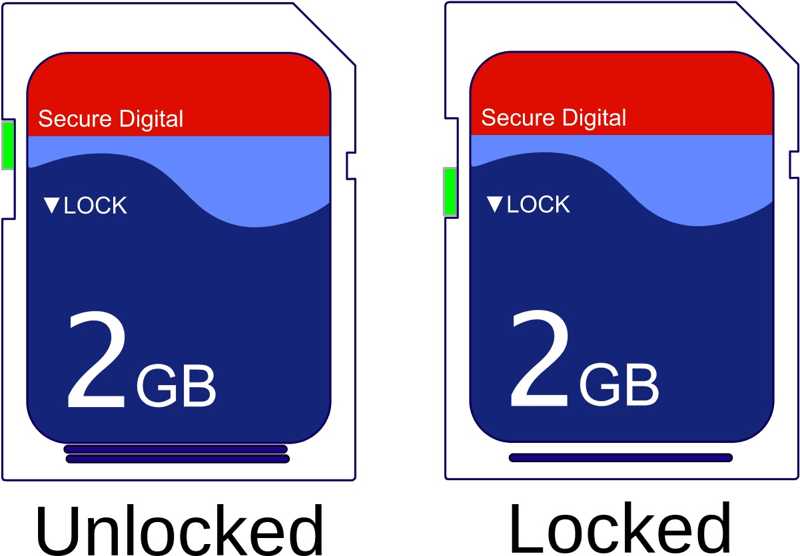
Solution 1: Unlock SD Card
Some SD cards integrate a lock clipart. If you accidentally move the clipart and lock the card, your computer cannot read it. Therefore, the first thing you need to do when the SD card does not read is check the clip. If it is locked, move the clipart to unlock it.
Solution 2: Update SD Card Driver
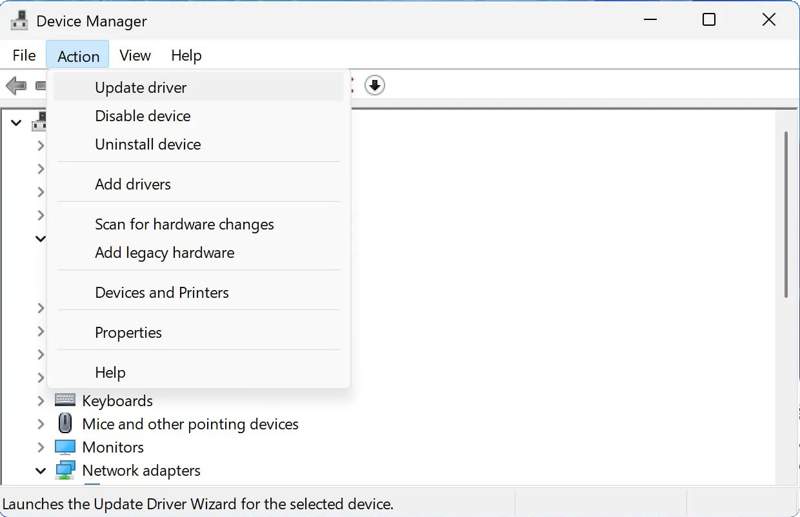
In most cases, the computer is not reading the SD card due to an outdated or missing SD card driver. The solution is simple: update the driver on your PC or reinstall the missing driver. Here are the steps:
Step 1. Right-click the Start menu and choose Device Manager.
Step 2. Expand the Disk drivers entry and select your SD card reader.
Step 3. Go to the Action menu and choose Update driver. Or right-click on the reader and choose Update driver.
Solution 3: Assign a New Driver Letter
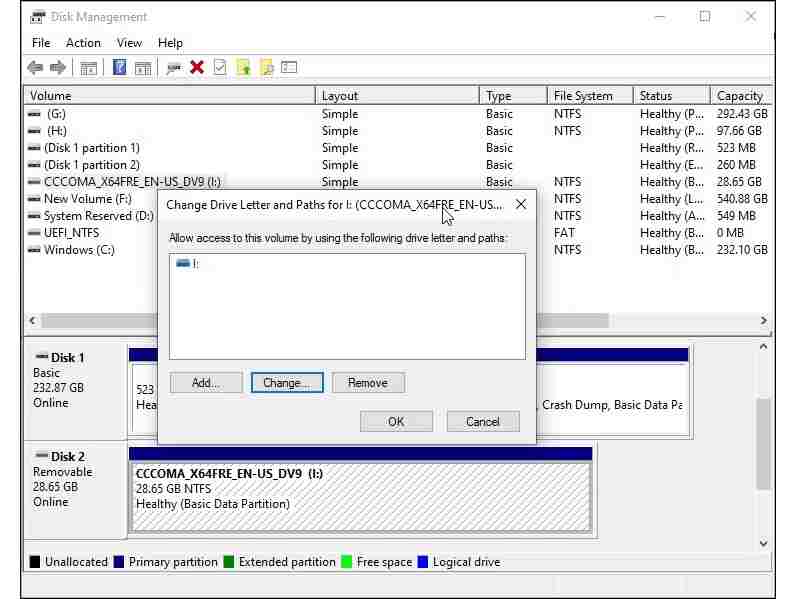
The operating system detects the letter of your SD card and reads files on it. If the drive letter conflicts with an existing drive, your PC cannot read the SD card. You can assign a new driver letter to the card.
Step 1. Right-click on the Start menu and choose Disk Management.
Step 2. Right-click on your SD card reader and choose Change Drive Letter and Paths.
Step 3. Click Change and assign a new letter that no driver uses.
Solution 4: Repair SD Card with CHKDSK
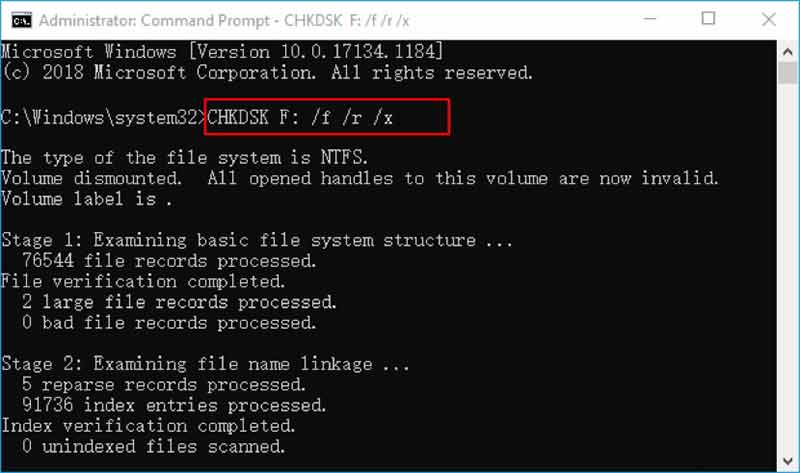
Windows integrates an SD card repair feature, CHKDSK. It can repair file system errors and fix the SD card reader not working due to file system corruption. Since it is a command-line tool, follow the workflow below carefully:
Step 1. Right-click the Start menu and run Command Prompt(Admin) or PowerShell(Admin).
Step 2. Type in chkdsk X: /R. Replace X with the letter of your SD card. Press the Enter key on your keyboard.
Step 3. When it is done, reboot your PC, and try your SD card again.
Part 3: How to Fix SD Card Not Reading on Mac
Solution 1: Restart Your Mac
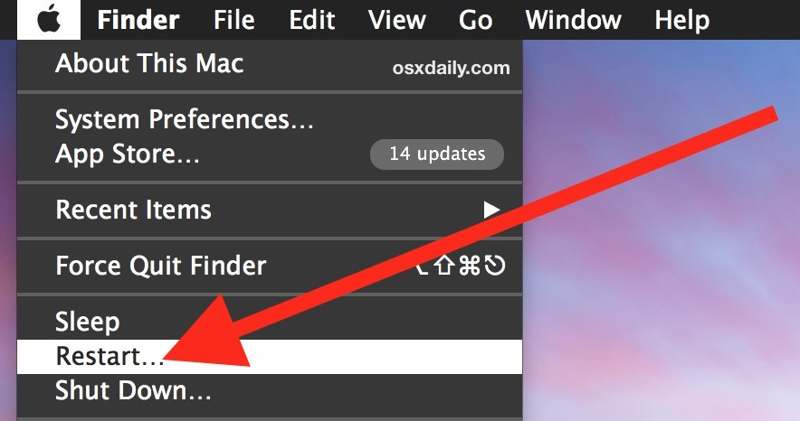
Sometimes, Mac not reading the SD card is due to your computer getting stuck, or the operating system doesn't start the driver correctly. All you need to do is restart your machine and try your SD card again.
Step 1. Eject your SD card.
Step 2. Click the Apple menu and choose Restart.
Step 3. Wait for your Mac to start again.
Step 4. Log in with your user account.
Step 5. Then, plug the SD card or reader into your Mac.
Solution 2: Repair SD Card with Disk Utility
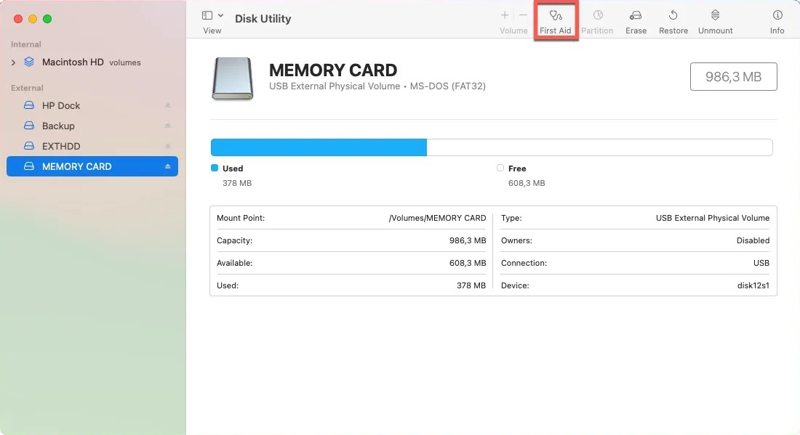
If your Mac is not reading the SD card due to file system corruption, you can repair it using the built-in First Aid feature. It is a part of Disk Utility and is able to fix common file system errors for internal and external hard drives.
Step 1. Open the Applications folder in Finder, choose Utilities, and run Disk Utility.
Step 2. Select the SD card on the sidebar.
Step 3. Click the First Aid button on the top ribbon, and click Run.
Step 4. When the process finishes, try your SD card again.
Part 4: Bonus Tip: How to Extract Data from an Unreadable SD Card
Even if your SD card does not read and you cannot fix it, you can extract lost files using Apeaksoft Data Recovery. It can scan your unreadable SD card and look for lost files. The intuitive interface makes it easy to navigate.
A Quick Way to Extract Data from an Unreadable SD Card
- Retrieve data from any SD card quickly.
- Preview lost files for selectively recovering.
- Support a wide range of file types and formats.
- Work on Windows 11 to XP, and macOS 10.7 or above.
Secure Download
Secure Download

How to Extract Data from an Unreadable SD Card
Step 1. Scan your SD card
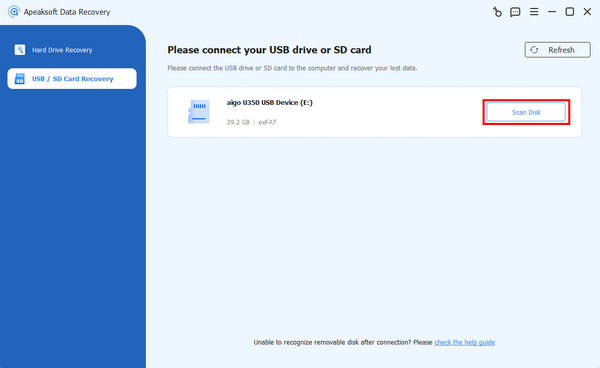
Run the data recovery software after installing it on your PC. There is another version for Mac. Insert the SD card into your machine. Go to the USB / SD Card Recovery tab, select the SD card, and click Scan Disk.
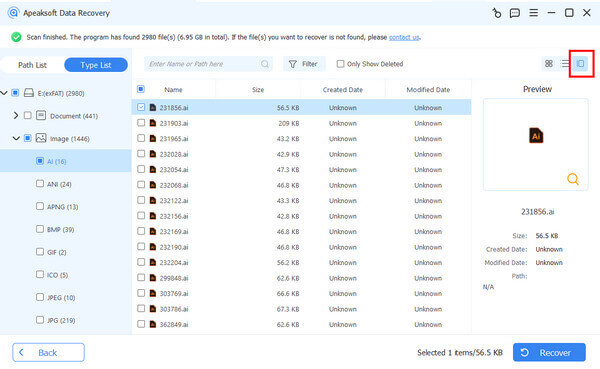
Step 2. Preview lost files
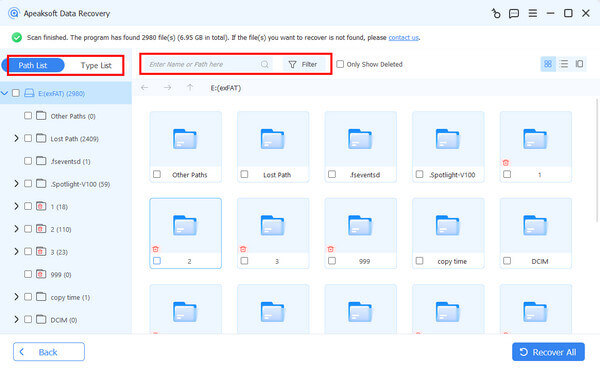
Next, go to the Type List tab, select the desired data types, and preview lost files on your SD card. If you want to view files by directory, go to Path List.
Step 3. Extract data from the SD card
Select the files you want to retrieve, and click the Recover button. Set an output folder and confirm it.
Further Reading
Conclusion
This article explained what you should do if your PC and Mac don't read the SD card. You can learn the main causes of the problem first. Then, follow our solutions to address the problem on your own. More importantly, we recommended Apeaksoft Data Recovery to help you extract data from the SD card.
Related Articles